
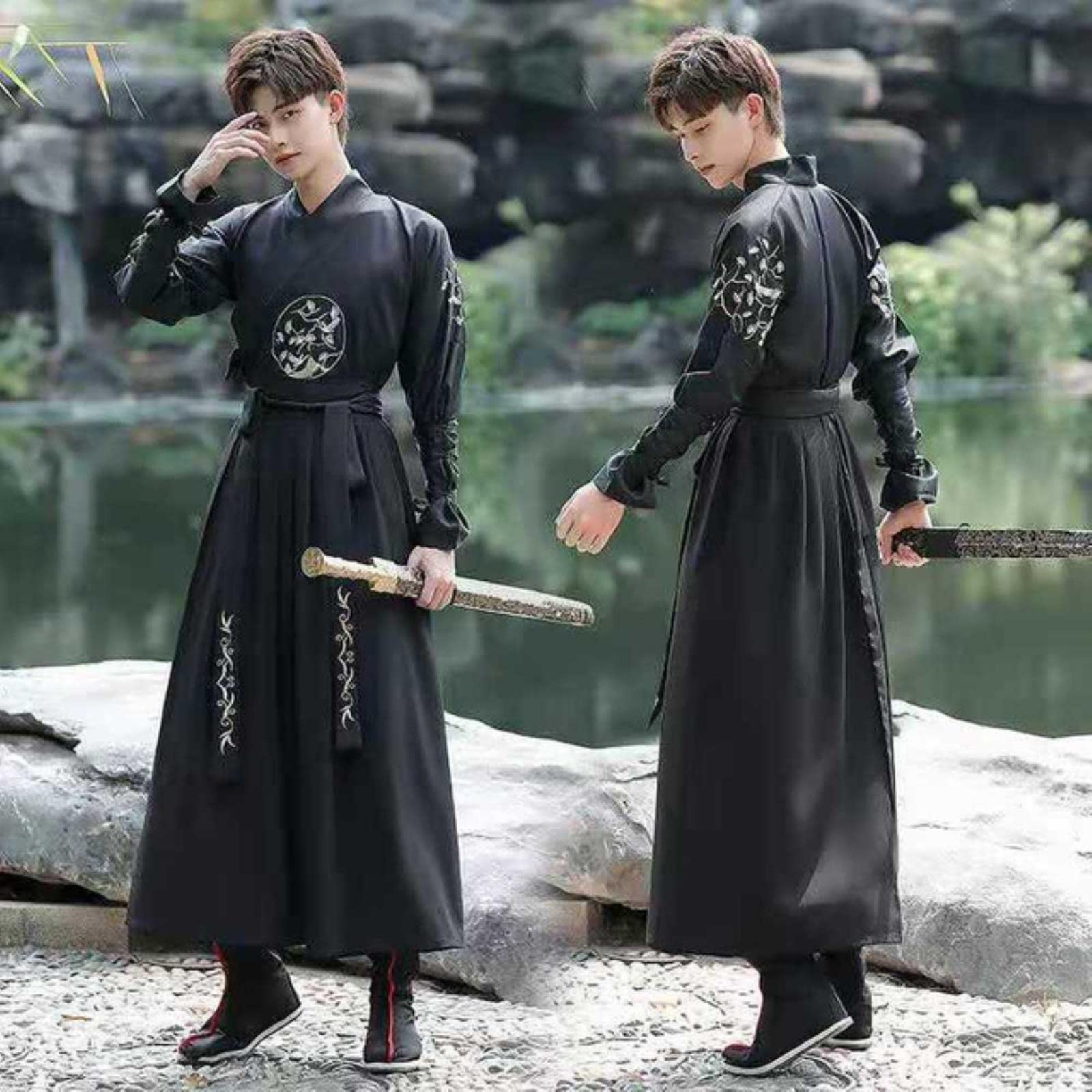
Throughout history, clothing has served as a vivid reflection of cultural identity, social status, and artistic expression. In Chinese culture, Hanfu-the traditional attire of the Han Chinese-offers a fascinating window into the past, particularly when examining how men’s styles evolved across various dynasties. Exploring different dynasties through men’s Hanfu styles not only reveals shifts in aesthetics but also provides insight into broader historical contexts and societal values.
During the Han Dynasty (206 BCE-220 CE), men’s Hanfu was characterized by simplicity and elegance. The garments typically consisted of wide sleeves and cross-collar robes tied with sashes rather than buttons. These robes often featured muted colors like white, black, or earth tones symbolizing modesty and harmony with nature. The emphasis on flowing lines reflected Confucian ideals of balance and propriety that dominated this era.
Moving forward to the Tang Dynasty (618-907 CE), men hanfu became more elaborate and colorful as China experienced a golden age marked by prosperity and openness to foreign influences. The Tang style incorporated luxurious fabrics such as silk adorned with intricate embroidery depicting dragons or phoenixes-symbols of imperial power and auspiciousness. Men’s robes during this period were often layered with inner garments visible at the collar or sleeves, showcasing craftsmanship while indicating rank within society.
The Song Dynasty (960-1279 CE) introduced a more restrained fashion compared to Tang flamboyance but maintained sophistication through subtle details. Men’s clothing favored softer colors like light blues or grays paired with simpler patterns emphasizing scholarly refinement over ostentation-a reflection of Neo-Confucianism’s influence encouraging introspection and moral cultivation.
In contrast, during the Ming Dynasty (1368-1644 CE), there was a revival of earlier Han traditions combined with innovations in tailoring techniques. Men’s Hanfu featured wider collars known as “jiaoling youren,” where the right side overlapped left-a design still common today in modern interpretations of traditional wear. Fabrics became heavier yet retained elegance through embroidered motifs representing longevity or fortune.
Finally, under Qing rule (1644-1912 CE), although Manchu-style clothing predominated due to political dominance, many Han Chinese men continued wearing modified versions of their ancestral attire for cultural preservation during festivals or rituals. This period underscores how clothing can serve both as adaptation under external influence and resistance preserving ethnic identity.
Examining these dynastic variations in men’s Hanfu highlights an evolving narrative shaped by philosophy, politics, economy, and intercultural exchange. Each dynasty imparted unique characteristics onto their apparel that communicated values beyond mere decoration-from Confucian virtues to imperial grandeur-making men’s traditional dress an invaluable tool for understanding China’s rich historical tapestry today.